














Emergency opening of TDPK N
Code: N


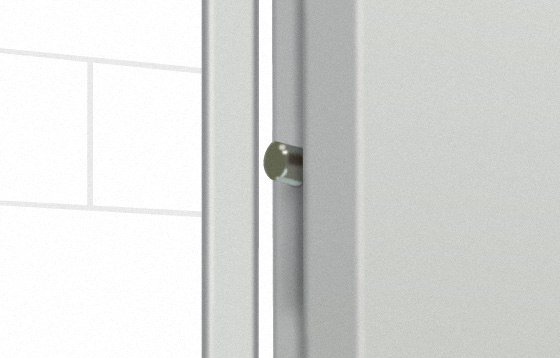
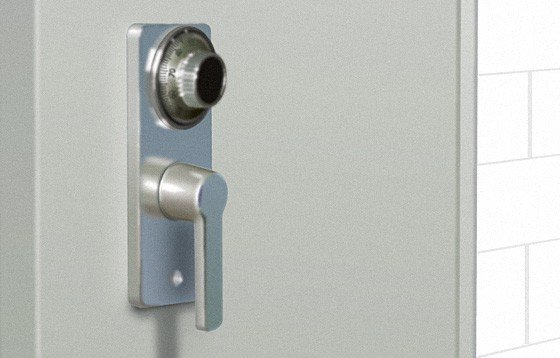
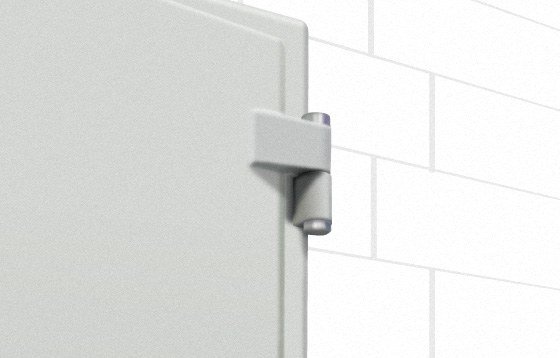
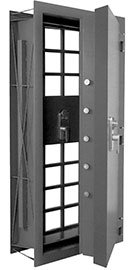
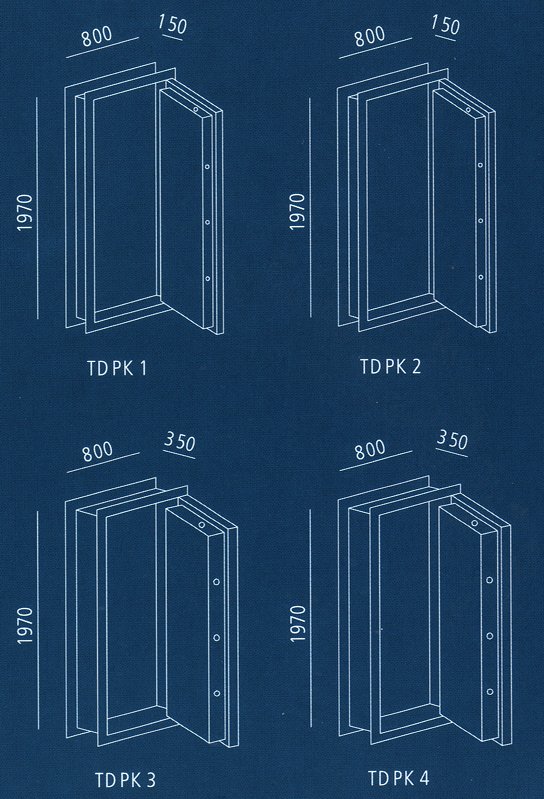
Code: TDPK1
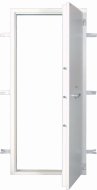
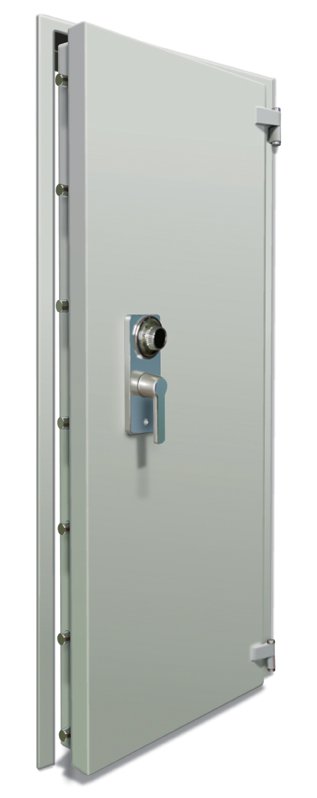
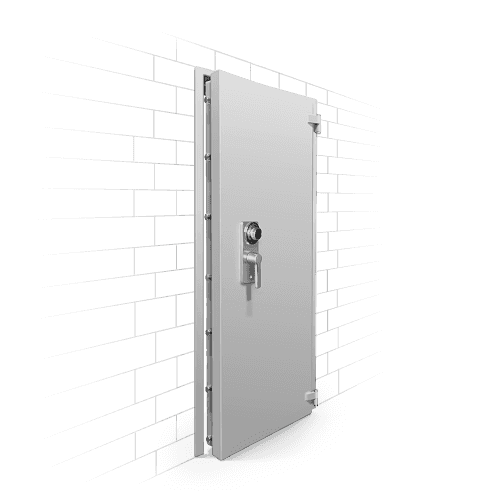
Firesafe safe door type TDPK. Construction readiness - opening height 2130 mm, opening width 1100 mm, wall thickness min. 200 mm. Safety class I - IV. For these products, even with a purchase value full description and parameters

Firesafe safe door type TDPK. Construction readiness - opening height 2130 mm, opening width 1100 mm, wall thickness min. 200 mm. Safety class I - IV. For these products, even with a purchase value over CZK 3,000 excluding VAT, shipping is paid according to the place of delivery.
| Model | Security Class | Weight (kg) | Outer dimensions (mm) | ||
| Height | Width | Depth | |||
| TDPK 1 | I | 300 | 1970 | 800 | 150 |
| TDPK 2 | II | 350 | 1970 | 800 | 150 |
| TDPK 3 | III | 1250 | 1970 | 800 | 350 |
| TDPK 4 | IV | 1300 | 1970 | 800 | 350 |
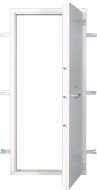

Choosing the right type of safe can save you a great deal of trouble and often a significant amount of money. A safe certified to the highest security class will, of course, provide excellent protection. However, if you only intend to store cherished photographs, for example, such an investment may be unnecessary. Ultimately, the final decision will always depend on your individual needs and preferences.
Your choice will always be influenced by several factors:
The final choice is usually a combination of, or a compromise between, these options.
Safe Security
You can choose between a certified and a non-certified safe. A non-certified safe (often referred to as a security box) is usually sufficient for home use, such as storing a small amount of cash, and is commonly available as a furniture safe.
In all other cases, a certified safe (in accordance with EN 1143-1) is recommended. The appropriate security grade depends on the value of the items stored inside the safe. However, it is always advisable to consult your insurance provider in advance regarding the required level of protection for your property, valuables, or jewellery.
The following table provides a general overview of the security classes:
| Security Class | Number of Locks | Approximate Storage Value (CZK) |
| Class 0 | 1 pcs | 300.000 |
| Class I | 1 pcs | 500.000 |
| Class II | 1 pcs | 1.200.000 |
| Class III | 1 pcs | 4.000.000 |
| Class IV | 2 pcs | 6.000.000 |
| Class V | 2 pcs | 16.000.000 |
| Class VI | 2 pcs | 30.000.000 |
A special category includes safes designed for documents subject to special security regulations. These are documents that may be classified as confidential or secret. Such documents are not only the concern of spies and intelligence agencies. Even small businesses should protect sensitive documents, such as research data, proprietary information, or important business records.
Certification is governed by the regulations of the National Security Authority, and according to these regulations, safes are classified as follows:
| Designation | Classification Level | Security Class |
| Grade V | „Restricted“ | třída 0 |
| Grade D | „Confidential“ | třída 0 |
| Grade T | „Secret“ | třída I |
| Grade PT | „Top Secret“ | třída II |
What Will You Store in the Safe?
It is obvious that a safe designed for firearms and ammunition will differ significantly from one intended for jewellery. For storing cash and valuables, a smaller safe suitable for installation in furniture or within a wall is usually sufficient. For document storage, a fire-resistant or waterproof safe is generally the better choice.
A special category is made up of safes designed for data storage media. Many companies completely neglect the technical protection of their important data.
For example:
These figures are truly alarming. Yet preventing data loss is surprisingly simple. All it takes is choosing the right safe or security cabinet. An investment of a few thousand pounds or euros can help prevent losses worth millions.
For document protection, the internal temperature must not exceed 150°C for at least 60 minutes. For the protection of data storage media, the internal temperature must not exceed 52°C.
Safe Installation Location
According to the installation location, safes can be divided into three basic types:
One of the basic criteria for choosing a safe is always its security expressed by the safety class of the safe. In the Czech Republic, the inclusion of a safe in a security class is based on two standards, namely the Czech standard ČSN 916012 and the European standard EN 1143-1.
Standard EN 1143-1 regulates the safety of safes in those cases where higher requirements are placed on the safety of safes. According to this standard, seven safety classes are distinguished. The basic security level of safes is governed by the ČSN 916012 standard, which distinguishes a total of three levels of security.
Security classes of safes according to the EN 1143-1 standard:
There are a total of seven safety classes, designated 0 to VI. A label on the inside of the door, which is firmly attached, usually with rivets, informs the interested party about how the safes are classified in the relevant category. Certificates on the inclusion of the safe in the security class are issued by certified laboratories that have gone through the certification process and have the appropriate knowledge and skills. The classification of safes is the same throughout the European Union. When classifying safes, testing laboratories carry out tests and forceful opening of the safe.
Used tools and time are taken into account for evaluating the safe. The rating of the safe is expressed as a resistance value expressed in RU (resistance units). The higher the number of RUs, the higher the resistance and protection of the safe against burglary.
Vaults are always classified according to the lowest measured resistance. Breaking the protection of the safe takes the form of either manual opening, then it is a so-called partial break-in, or breaking the door, i.e. a so-called full break-in. The test results are then converted to the RU value.
For a better orientation in the classification of security classes, we present indicative deposit amounts in CZK. In order to determine the relevant financial deposit amount, however, a consultation with the relevant insurance company is always necessary. In order to meet the safety requirements and classify the safe in a given class, it is necessary to observe the proper anchoring of the safe in the wall or in the floor or walling of wall safes, which is always indicated in the attached instructions.
Security class 0 for vaults:
Lowest number of locks: 1
Lowest required security lock class: A
Approximate storage amount: CZK 300,000
Resistance units: RU (30/30)
Safety class I for safes:
The lowest number of locks: 1
The lowest required security lock class: A
Approximate storage amount: CZK 500,000
Resistance units: RU (30/50)
Safety class II for safes:
Lowest Number of Locks: 1
Lowest Required Security Lock Class: A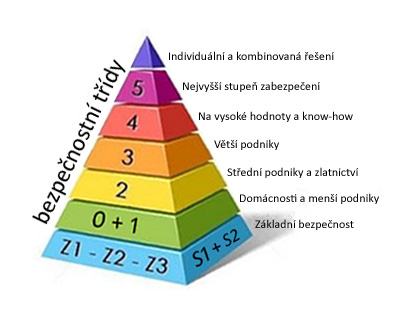
Approximate storage amount: CZK 1,200,000
Resistance units: RU (50/80 )
Safety class III for safes:
The lowest number of locks: 1
The lowest required security lock class: B
Approximate storage amount: CZK 4,000,000
Resistance units: RU (80/120)
Safety class IV for safes:
The lowest number of locks: 2
The lowest required security lock class: B
Approximate storage amount: CZK 6,000,000
Resistance units: RU (120/180)
Safety class V for safes:
The lowest number of locks: 2
The lowest required security lock class: B
Approximate storage amount: CZK 16,000,000
Resistance units: RU (180/270)
Safety class VI for safes:
Minimum number of locks: 2
Indicative deposit amount: CZK 30,000,000
Security classes of safes according to the ČSN 916012 standard:
The safety of safes can be further assessed according to the ČSN 916012 standard, which is intended for the classification and testing of mobile safes with basic security according to their resistance to burglary, which are not addressed by the EN 1143-1 standard.
Safety class Z1 for safes:
Resistance units: RU (10/10)
Lowest number of locks: 1
Lowest lock class: A
Intended for, e.g.: storing a weapon, storing things for the time of your absence, etc. .
Safety class Z2 for safes:
Resistance units: RU (15/20)
Lowest number of locks: 1
Lowest lock class: A
Intended for e.g.: storing medicines, poisons, documents, weapons and cash in CZK 30,000
Safety class Z3 for safes:
Resistance units: RU (20/25)
Lowest number of locks: 1
Lowest lock class: A
Intended for, e.g.: storage of documents, medicines, poisons, up to 10 pieces of weapons and cash up to CZK 50,000
Security classes S1 and S2 for safes:
Safety classes "S" according to the EN 14450 standard are not actually safety classes of safes, but of safes, metal boxes and tin cabinets. The manufacturer of safes often has one of their products certified in this class so that they can offer clients a certified product, but there is not much to say about security. It is stated more or less only for the good feeling of the user that he has a certified product.
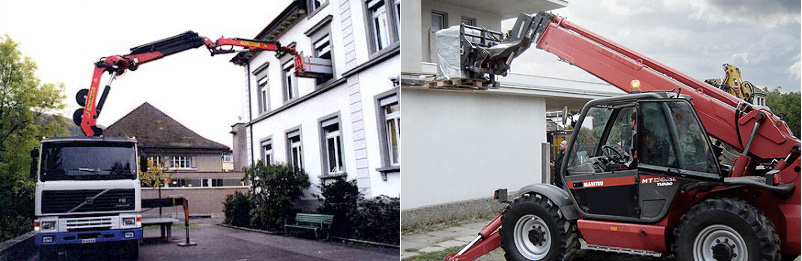
Shipping of goods worth more than CZK 5,000 without VAT is free, but for heavier safes, you need to agree in advance the rate for handling and moving in for the first lockable door depending on the difficulty (accessibility, number of stairs, terrain, etc.).
Before ordering a safe with a request for transport and location, we therefore recommend that you inquire in advance about the price for transport and handling according to your specific conditions (elevator, availability of an elevator, terrain and distance from a normally passable road, stairs to the elevator and their number, etc. ). Our salespeople will then tell you the total price immediately.
Manipulation and removal of safes (approximate prices):
| Moving the safe upstairs | Type (prices without VAT 21%) |
| Floor without lift up to 30 kg | CZK 100,- |
| Floor without lift up to 60 kg | CZK 250,- |
| Floor without elevator up to 100 kg | CZK 500,- |
| Floor without elevator up to 200 kg | CZK 800,- |
| Floor without elevator up to 300 kg |
CZK 1,000,- |
| Floor without lift up to 400 kg |
CZK 1,500,- |
| Floor without elevator over 400 kg |
price individually |
| Floor with lift |
free or individual price according to the weight of the safe and the difficulty of handling |
Do you have a question about this product? Write to us and we will be happy to answer you.